Every team adopting AI hits the same fork: buy an off-the-shelf tool, or build something custom. The honest answer is that buying is the right default and building is the right exception, and the skill is knowing which situation you are in.
We do custom builds for a living, so take this as a deliberately balanced view. Building the wrong thing is expensive, and a good advisor tells you when not to hire them.
The default: buy, until you cannot
If an off-the-shelf product does the job, buy it. You get maintenance, updates, and someone else's roadmap for a predictable fee. Custom only wins when the thing you need is genuinely yours: your data, your workflow, your differentiation, or a constraint a vendor will never prioritize.
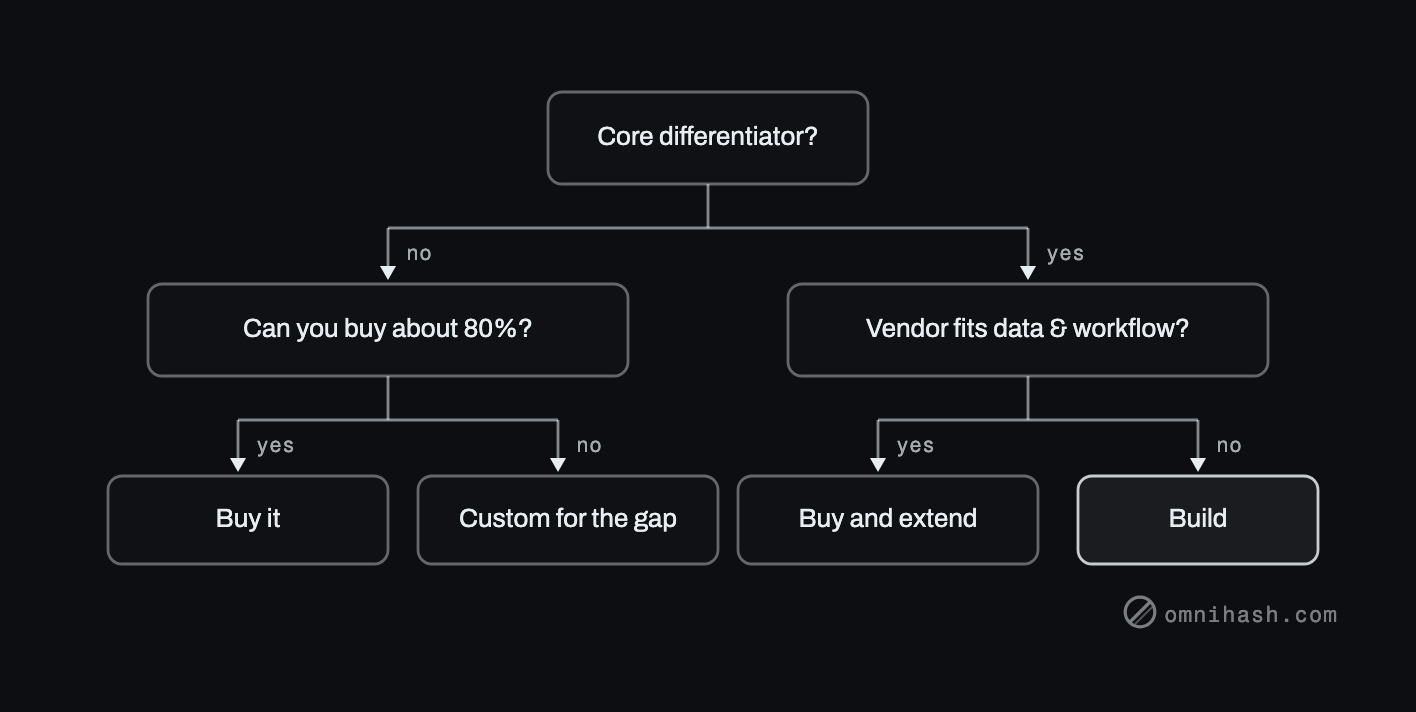 Figure 1. Build for what differentiates you and what no vendor will fit. Buy everything else.
A comparison that survives contact with reality
| Factor | Off-the-shelf | Custom build |
|---|---|---|
| Time to first value | Fast | Slower |
| Fit to your workflow | Approximate | Exact |
| Ongoing cost | Subscription, scales with seats or usage | Build once, then maintenance |
| Differentiation | Shared with everyone who buys it | Yours |
| Control of data | Vendor terms | Yours |
| Roadmap | Vendor decides | You decide |
| Lock-in | Often high | You own the code |
The total-cost questions teams forget
The sticker price is the smallest part of the decision. Before you buy, ask:
- What does it cost at scale? Per-seat or per-call pricing that is cheap in a pilot can be painful at full usage.
- Where does your data go, and are those terms acceptable for your customers and your compliance story?
- How hard is it to leave? If the vendor changes price or direction, what is your exit?
- How much custom glue will you write anyway? Many "bought" solutions still need significant integration, which narrows the gap with building.
Before you build, ask:
- Is this actually a differentiator, or are we rebuilding a commodity for ego or fear of lock-in?
- Can we maintain it after launch, or will it rot?
- What is the smallest version that captures the value, so we are not building a platform when we need a feature?
Buy to move fast on commodities. Build to own what makes you different. Most teams should buy more than they build, and build more deliberately than they do.
A common and sensible answer: both
The real world is rarely all-or-nothing. A frequent pattern is to buy the commodity layer and build a thin custom layer where you differentiate, joined at an interface you own. You get speed where speed is fine and control where control matters.
If you are facing a specific build-versus-buy call, the fastest way to clarity is to name the one capability that has to be yours. Everything else is probably a purchase. We are glad to be the second opinion, including when the answer is "buy it."